

The biggest glute-building myths that keep women stuck
- Swift Results Glute Factory
- Jan 2
- 5 min read
Women pursuing glute development often find themselves trapped in cycles of ineffective training despite consistent effort. Research has identified several persistent myths that significantly hinder progress and prevent the glute transformation many seek. Understanding these misconceptions is essential for creating an effective training approach.
Myth 1: Constantly Changing Exercises Prevents Plateaus
One of the most detrimental beliefs in glute training involves the assumption that frequent exercise variation prevents plateaus and accelerates results. This approach actually causes regression in glute development, as muscles require consistent stimulus and progressive overload to adapt and grow.
Effective glute training depends on mastering fundamental movement patterns and gradually increasing resistance over time. When exercises change frequently, the body never adapts sufficiently to create the necessary muscle tension for growth. Instead of building strength in key movements, this approach spreads training stimulus too thin across multiple exercises.
Research demonstrates that progressive overload: gradually increasing weight, repetitions, or training volume: remains the primary driver of muscle development. This principle requires consistency in exercise selection to allow for measurable progression over weeks and months.

Myth 2: Squats Are the Ultimate Glute Exercise
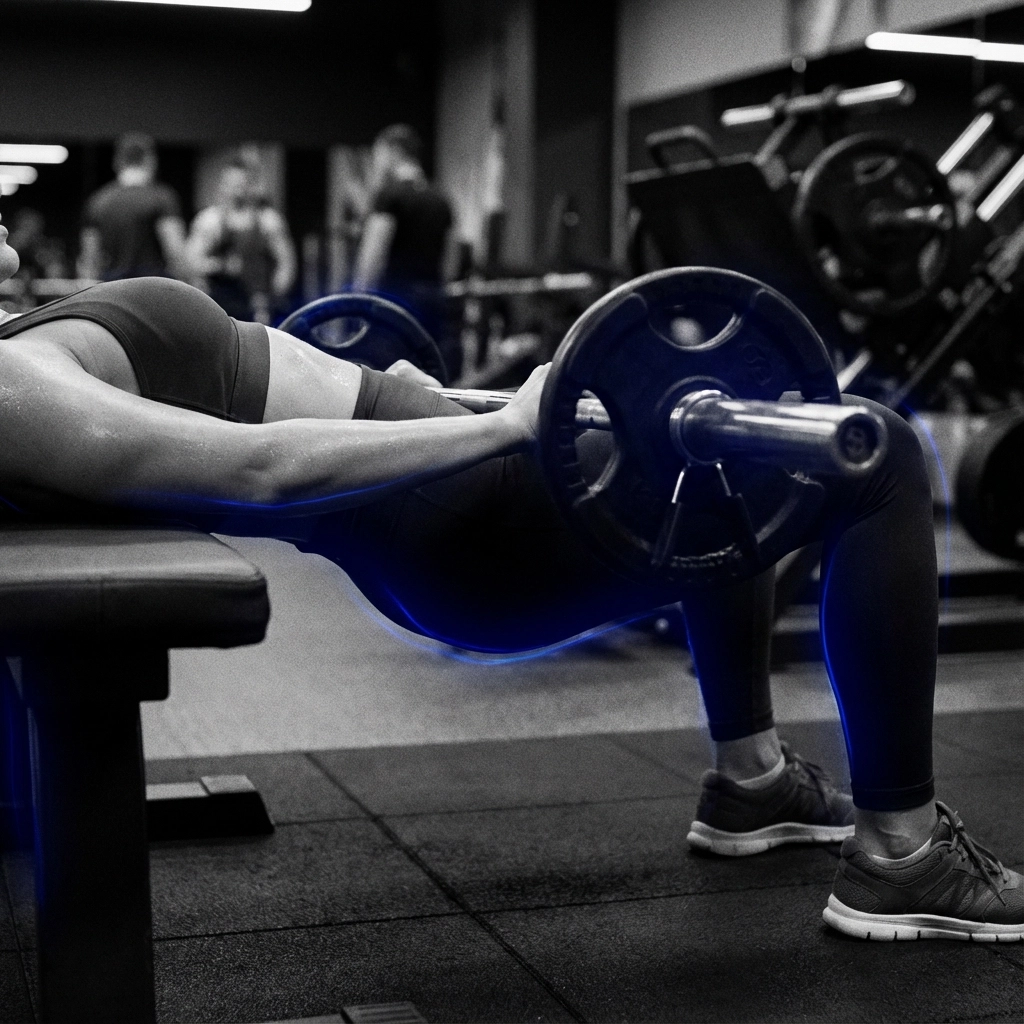
While squats provide valuable benefits as a compound movement, they do not represent the most effective exercise for targeted glute development. Electromyography studies consistently show that hip thrusts produce significantly greater gluteus maximus activation compared to back squats.
The biomechanics of squats primarily engage the quadriceps and require the glutes to work in a lengthened position. Hip thrusts, conversely, target the glutes through their full range of motion and allow for peak contraction at the top of the movement. This positioning creates optimal conditions for muscle fiber recruitment and growth stimulus.
Effective glute programs incorporate both exercises but prioritize hip thrusts for maximum muscle activation. Squats serve as an excellent accessory movement that contributes to overall lower body strength and functional movement patterns.
Myth 3: Spot Reduction Through Cardio Eliminates Fat
Many women believe that targeted cardio exercises or specific machines will reduce fat in the glute and hamstring area. This concept of spot reduction lacks scientific support and represents a fundamental misunderstanding of fat loss physiology.
Fat loss occurs systematically throughout the body based on individual genetic patterns and overall energy balance. No exercise can selectively remove fat from specific body regions. The appearance of improved glute definition results from two factors: increased muscle mass in the glutes and reduced overall body fat percentage.
Cardiovascular exercise contributes to total daily energy expenditure but does not preferentially target fat in any specific area. Women seeking improved glute appearance must focus on building muscle through resistance training while creating an appropriate caloric deficit through combined diet and exercise approaches.
Myth 4: Special Glute-Ham Tie-In Exercises Exist
The fitness industry frequently promotes exercises claiming to target a "glute-ham tie-in" muscle, but this anatomical structure does not exist. The visible separation between the glutes and hamstrings results from the development of multiple muscles including the gluteus maximus, hamstring group, and adductor magnus.
Creating definition in this area requires comprehensive training of all involved muscle groups combined with sufficient reduction in body fat to reveal underlying muscle structure. No single exercise or specialized movement pattern can create this appearance independently.
Effective programs focus on strengthening the posterior chain through compound movements like Romanian deadlifts, hip thrusts, and hamstring curls rather than pursuing non-existent anatomical targets.
Myth 5: Sprinting Maximizes Glute Activation
Sprint training receives significant attention for glute development, with many believing it provides superior muscle activation compared to resistance exercises. Research examining muscle activation patterns reveals that sprinting does not produce greater glute engagement than properly executed hip thrusts or back extensions.
While sprinting offers cardiovascular benefits and contributes to athletic performance, it does not represent the optimal stimulus for glute hypertrophy. The brief ground contact time and movement mechanics of sprinting limit the sustained muscle tension necessary for growth adaptations.
Resistance training allows for controlled movement execution, progressive overload application, and sustained time under tension: all critical factors for muscle development that sprinting cannot provide.

Myth 6: Weekly Training Frequency Is Sufficient
Some training approaches suggest that one weekly glute session provides adequate stimulus for growth. This frequency fails to optimize muscle protein synthesis and limits progress potential significantly.
Research on training frequency indicates that muscle groups respond optimally to training stimuli applied 2-3 times per week. This frequency allows for appropriate recovery between sessions while maintaining elevated muscle protein synthesis rates throughout the week.
Higher training frequencies enable greater weekly training volume distribution and provide more opportunities for skill development in key exercises. Women seeking maximal glute development should prioritize consistent training frequency over sporadic high-volume sessions.
Myth 7: Muscle Contraction and Time Under Tension Are Optional
Many women report feeling no sensation in their glutes during training, indicating insufficient muscle activation and suboptimal training stimulus. This issue stems from inadequate focus on proper muscle contraction and controlled movement execution.
Effective glute training requires conscious muscle engagement throughout each repetition's full range of motion. This mind-muscle connection enhances muscle fiber recruitment and creates the mechanical tension necessary for growth adaptations.
Time under tension: the duration muscles remain contracted during each set: significantly influences training outcomes. Controlled eccentric (lowering) phases and brief pauses at peak contraction maximize training stimulus and improve neuromuscular coordination.

Myth 8: Diet Alone Builds Glutes
Popular social media trends promote "glute diets" claiming that specific nutritional approaches alone can create glute development. This concept ignores the fundamental principle that muscle growth requires mechanical stimulus through resistance training.
While proper nutrition supports muscle development by providing necessary building blocks and energy for training, dietary changes cannot create muscle tissue independently. Muscle hypertrophy requires progressive mechanical overload combined with adequate protein intake and total caloric consumption.
Women seeking glute development must prioritize structured resistance training while ensuring sufficient nutritional support through balanced macronutrient intake and appropriate caloric consumption relative to training demands and body composition goals.
Evidence-Based Glute Development Approach
Effective glute training incorporates several key principles supported by exercise science research. Training frequency of 2-3 sessions per week provides optimal stimulus distribution while allowing adequate recovery. Exercise selection should emphasize hip thrusts as the primary movement, supplemented by Romanian deadlifts, Bulgarian split squats, and lateral lunges.
Progressive overload remains essential, requiring systematic increases in training load through added resistance, increased repetitions, or enhanced training volume. Proper movement execution with controlled tempo and conscious muscle contraction maximizes training stimulus and promotes skill development.
Nutritional support requires adequate protein intake (0.8-1.2 grams per pound of body weight), sufficient carbohydrates for training fuel, and appropriate total caloric intake based on individual goals and activity levels. Recovery practices including adequate sleep and stress management contribute significantly to training adaptations.
Understanding these evidence-based principles while avoiding common myths enables women to create effective training approaches that produce measurable glute development over time. Success requires patience, consistency, and commitment to proven methodologies rather than pursuit of quick fixes or trending approaches.
Comments