

The Truth About 'Booty Bands' vs. Real Glute-Building Equipment
Scroll through any fitness hashtag on social media and colorful resistance bands wrapped around thighs dominate the feed. These "booty bands" have become synonymous with glute training, promising sculpted backsides from the comfort of home. The marketing is compelling, the price point is accessible, and the convenience factor is undeniable.
However, the reality of muscle building tells a different story. Understanding the distinction between activation tools and growth-promoting equipment can save months: or even years: of frustration for anyone serious about transforming their physique. This breakdown covers what booty bands actually accomplish, where they fall short, and what real glute-building equipment looks like in a professional glute lab setting.
What Booty Bands Actually Accomplish
Before dismissing resistance bands entirely, it is important to acknowledge their legitimate uses. Booty bands serve several valuable purposes when incorporated correctly into a comprehensive training program.
Muscle Activation and Warm-Up
Resistance bands excel at "waking up" the glutes before heavier training. Exercises like clamshells, monster walks, and lateral band walks create constant tension that helps establish a strong mind-muscle connection. For individuals who struggle to feel their glutes working during compound movements, banded activation drills can make a meaningful difference.

Rehabilitation and Recovery
Physical therapists frequently recommend resistance bands for injury recovery. The controlled, low-impact resistance allows for safe strengthening without the joint stress that comes from heavy loading. For postpartum individuals or those returning from injury, bands provide an appropriate entry point back into glute training.
Endurance and Burnout Finishers
At the end of a strength session, bands can serve as effective finishers. High-rep banded work creates metabolic stress and can enhance the overall training effect when combined with heavier movements completed earlier in the workout.
Key takeaway: Resistance bands have a place in glute training: just not as the primary growth stimulus.
The Science Behind Why Bands Fall Short for Growth
The fundamental limitation of booty bands comes down to resistance capacity and the biological requirements for muscle hypertrophy.
Insufficient Load for Hypertrophy
Research has shown that muscle growth requires sufficient mechanical tension: essentially, the muscle must be challenged with enough resistance to trigger adaptation. The glutes are among the largest and most powerful muscle groups in the human body, designed to generate significant force for activities like sprinting, jumping, and lifting heavy objects.
Most resistance bands simply cannot provide the load necessary to challenge these powerful muscles into growth. The burning sensation felt during high-rep banded exercises represents metabolic fatigue rather than the muscular failure that triggers hypertrophy.
Decreased Performance Under Study
A recent electromyography study examined the effects of resistance bands during hip thrusts and glute bridges. The findings revealed that bands actually decreased the amount participants could lift by approximately 20kg. Additionally, the bands failed to increase muscle activity in the gluteus medius: the portion responsible for the rounded, lifted appearance many people seek.

The Progressive Overload Problem
Muscle building requires progressive overload: gradually increasing the challenge over time. Resistance bands have a ceiling. Once someone can complete 50 banded squats, the only option is to do more repetitions. This approach builds endurance but does not provide the progressive resistance needed for ongoing muscle development.
With proper equipment, the progression is clear: add more weight, perform more challenging variations, or increase training volume in measurable ways.
What Actually Builds Glutes
Transforming the glutes requires equipment and programming that match the demands of these powerful muscles. Here is what the evidence supports for actual glute development.
Heavy Compound Movements
The foundation of glute building consists of exercises that allow for significant loading:
Hip thrusts: Often called the king of glute exercises, hip thrusts allow for heavy loading in the optimal range of motion for glute activation
Squats: Both back squats and goblet squats challenge the glutes through a full range of motion
Deadlifts: Romanian deadlifts and conventional deadlifts load the posterior chain effectively
Leg presses: Foot placement can be adjusted to emphasize glute involvement
Lunges and split squats: Unilateral movements address muscle imbalances while providing substantial stimulus
Appropriate Rep Ranges
For muscle growth, research supports the 8-12 repetition range for compound movements. This range provides sufficient mechanical tension while allowing for adequate training volume. Occasionally working in lower rep ranges (4-6) with heavier loads and higher rep ranges (15-20) with moderate loads adds variety and addresses different aspects of muscle development.
Specialized Glute Lab Equipment
A dedicated glute lab offers equipment specifically designed to target the glutes from multiple angles and through various movement patterns. This includes:
Hip thrust benches with barbell setups
Cable machines for kickbacks and pull-throughs
Leg curl and extension machines
Plate-loaded glute-specific equipment
Heavy dumbbells and kettlebells
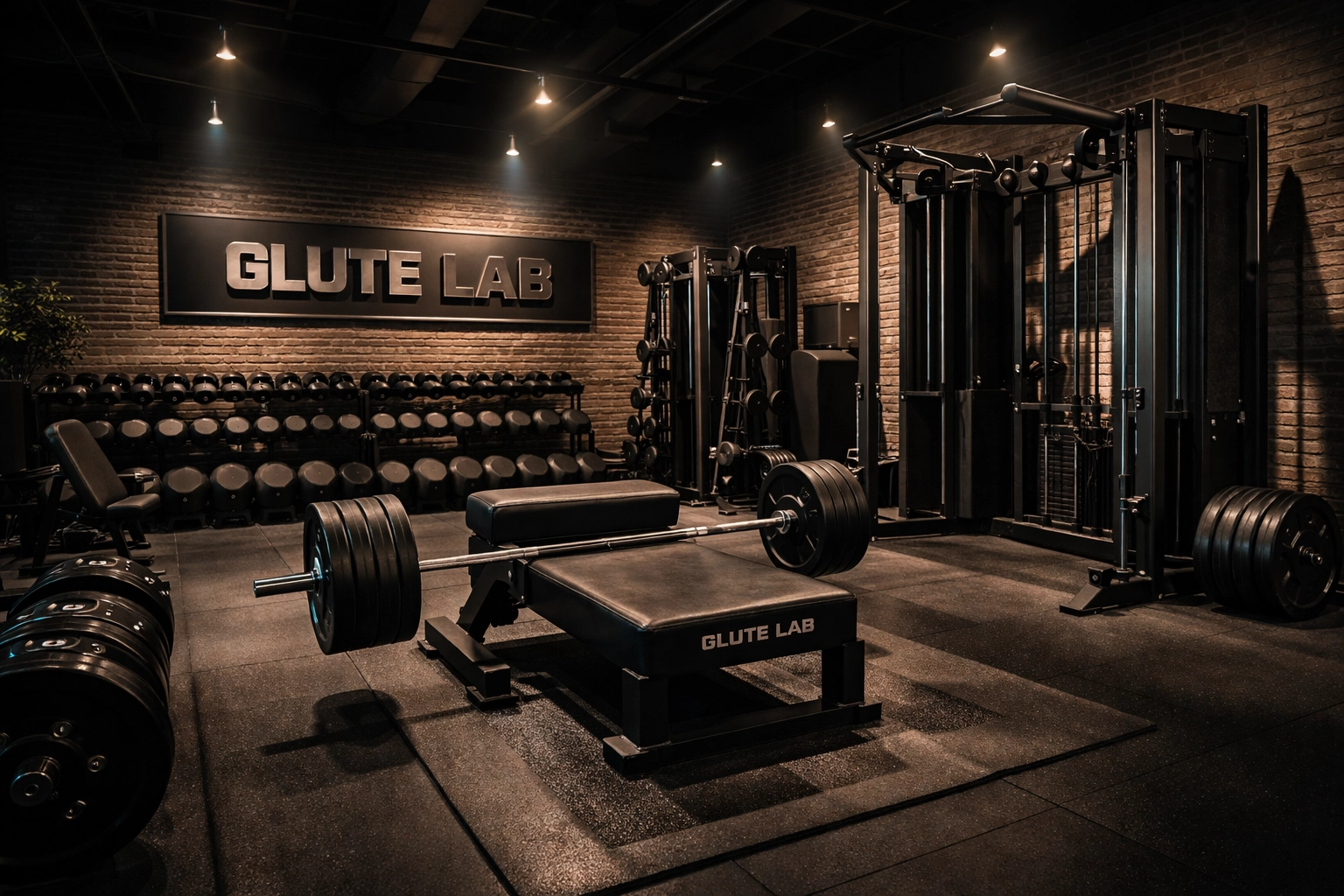
This variety ensures that all three gluteal muscles: the maximus, medius, and minimus: receive appropriate stimulus for balanced development.
The Glute Lab Difference
Anyone searching for "booty workouts near me" or "glute training near me" faces a choice between home-based band workouts and professional training environments. The differences extend beyond just equipment availability.
Progressive Programming
A structured glute lab environment offers programming that scales appropriately as strength increases. Random social media circuits cannot match the systematic progression that produces lasting results. Professional programming accounts for recovery, addresses weak points, and ensures that training stress increases at the right pace.
Expert Guidance
Form breakdown during heavy glute work can shift stress away from the target muscles and increase injury risk. A glute lab near me with qualified trainers ensures that technique remains optimal as loads increase. This guidance accelerates results while keeping training safe and sustainable.
Accountability and Consistency
The convenience of home band workouts often translates to inconsistent training. A dedicated training environment removes distractions and creates the accountability structures that support long-term adherence.
Environment Designed for Results
The equipment in a professional glute lab exists specifically because it works. Every piece serves a purpose in a comprehensive approach to glute development. This stands in contrast to the limitations of home setups where space, budget, and equipment selection inevitably compromise training options.
How to Use Both Strategically
The optimal approach integrates resistance bands within a program built around heavier resistance training.
Pre-Workout Activation (5-10 minutes)
Use banded clamshells, monster walks, or glute bridges to activate the muscles before moving to the main work. This improves the mind-muscle connection and can enhance performance on heavier lifts.
Main Training Block (30-45 minutes)
Focus on compound movements with barbells, dumbbells, cables, and machines. This is where the actual growth stimulus occurs. Progressive overload drives adaptation.

Optional Finisher (5-10 minutes)
Banded burnouts at the end of a session can add training volume without requiring additional heavy loading. This approach works well for metabolic conditioning and enhanced blood flow to the working muscles.
The Bottom Line
Booty bands have earned their place as activation tools, rehabilitation aids, and convenient options for travel or light movement days. They cannot, however, replace the heavy resistance training necessary for meaningful glute development.
For anyone serious about building stronger, more developed glutes, access to proper equipment and structured programming makes the difference between spinning wheels and achieving real transformation. A professional glute lab environment provides the tools, guidance, and accountability that social media band workouts simply cannot match.
The path to glute development requires appropriate challenge, progressive resistance, and consistent execution. Bands alone will not get anyone there: but combined with real glute-building equipment and expert programming, they can play a supporting role in the journey.
Ready to experience the difference that real glute-building equipment makes?Check out our plans and pricing or meet our trainers to start your transformation at Swift Results Glute Factory.
Comments