

Pelvic Floor and Glutes: 7 Mistakes You’re Making (and How to Fix Them)
- Swift Results Glute Factory
- Mar 16
- 5 min read
When you walk into Swift Results Glute Factory, you probably have one main goal: building a stronger, rounder, more powerful set of glutes. We love that. It’s what we do best. But there is a silent partner in your progress that most people completely ignore until something goes wrong. We’re talking about the pelvic floor.
If you’ve ever felt like your glute growth has hit a plateau, or if you deal with nagging lower back pain or even a little "leakage" during heavy squats, the connection between your pelvic floor and glutes is likely the culprit. These two muscle groups aren’t just neighbors; they are roommates who share the same utilities. When one isn't doing its job, the other suffers.
At the Glute Factory, we believe in training smart, not just hard. Understanding how to integrate these systems is the secret to elite-level results. Here are the seven most common mistakes people make when it comes to their pelvic floor and glute training, and exactly how to fix them.
1. You Think "Tight" Means "Strong"
One of the biggest misconceptions in fitness is that a "tight" muscle is a "strong" muscle. When it comes to the pelvic floor, many women spend their whole day in a state of "perma-grip": unconsciously clenching their pelvic floor and glutes.
If your pelvic floor is always contracted, it has nowhere to go. A muscle needs to be able to lengthen before it can contract powerfully. Think of it like a bicep curl; if you start with your arm halfway bent, you can’t get a full, powerful contraction. If your pelvic floor is too tight, it limits your hip's ability to achieve internal rotation. This is a massive problem because you need internal rotation to get full glute length during movements like squats and RDLS.
The Fix: You need to learn how to drop the floor. Prioritize "back body" breathing. Inhale deeply into your lower back and pelvic basin, feeling everything expand and relax. Only once you can fully relax the pelvic floor can you truly strengthen it and the glutes.
2. The Dreaded "Breath Holding" (Valsalva Gone Wrong)
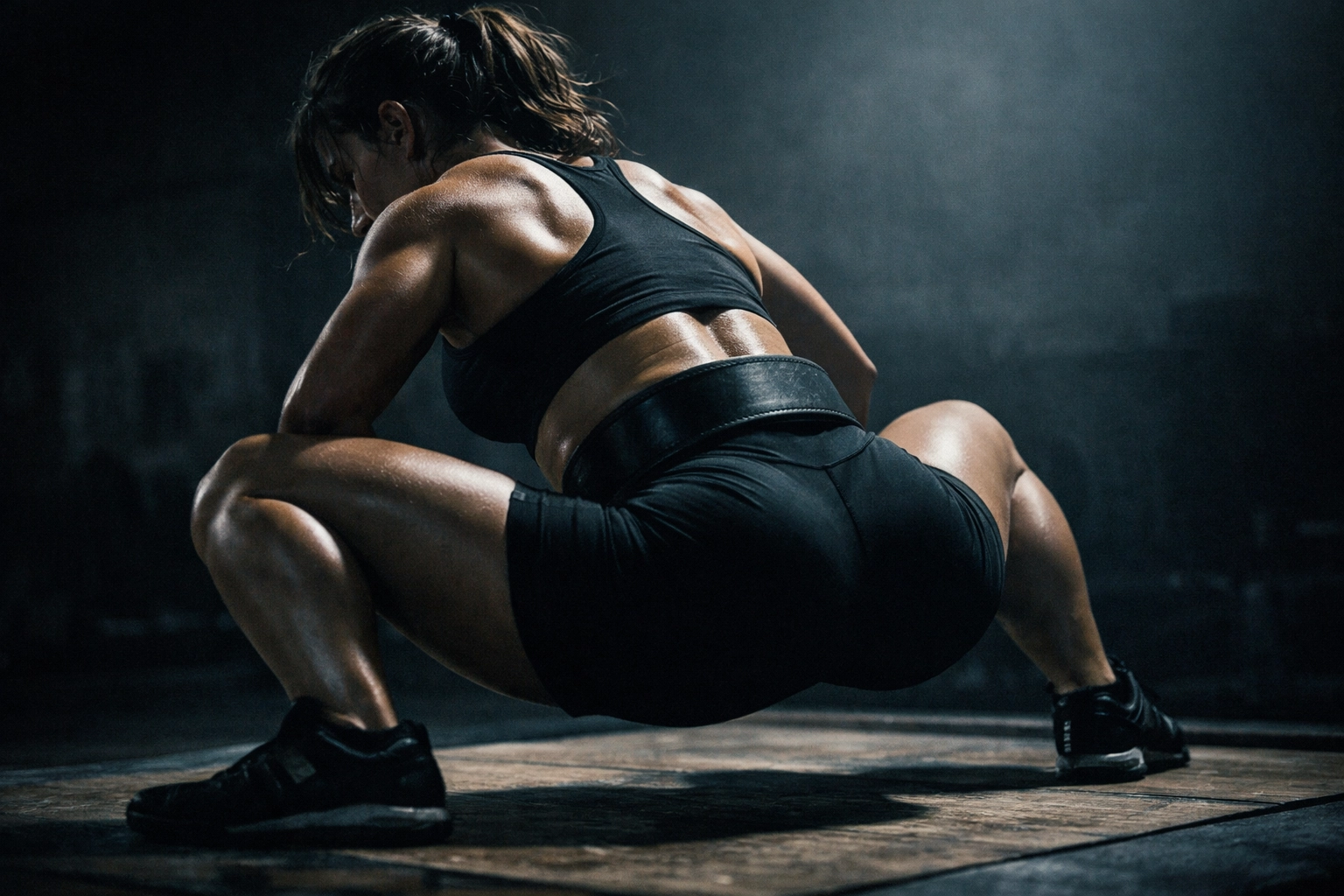
We’ve all seen it: someone goes for a heavy PR, turns beet red, and holds their breath until the rep is over. While "bracing" is important for heavy lifting, improper pressure management is a one-way ticket to pelvic floor dysfunction.
When you hold your breath and push "down" during a lift, you create massive intra-abdominal pressure. If your pelvic floor isn't ready to meet that pressure, it gets pushed down, which can lead to issues like prolapse or weakened deep core stability. This actually inhibits your glutes from firing because your body is in "emergency mode" trying to manage the pressure.
The Fix: Coordinate your breath with the movement. As a general rule at the Glute Factory, we teach the "Exhale on Effort" strategy. If you’re squatting, inhale on the way down (expanding the pelvic floor) and exhale as you drive back up to the top. This encourages the pelvic floor to lift and contract naturally with the glutes.
3. You’re Using the Wrong Muscles (Compensating)
Your body is a master of cheating. If your glutes are weak or your pelvic floor isn't engaging properly, your body will find another way to move the weight. Often, this means your lower back, hamstrings, or even your hip flexors take over the job.
If you find that your lower back is always "pumped" after glute day, but your glutes feel fine, you’re likely compensating. This creates a cycle where the glutes stay "sleepy," and the pelvic floor stays stressed because it’s trying to stabilize a spine that isn't being supported by the primary movers (the glutes).
The Fix: Slow down and focus on isolation before integration. Check out our Client Spotlight to see how others have corrected their form to target the right areas. Use tactile cues, literally touch your glutes during a bridge to make sure they are the muscles doing the work, not your lower back.
4. Neglecting the Gluteus Medius
Everyone wants the "big" glutes (the Gluteus Maximus), but the Gluteus Medius: the muscle on the side of your hip: is the MVP of pelvic stability.
When the glute medius is weak, your pelvis tilts and shifts during single-leg movements or even while walking. This instability forces the deep hip rotators (like the piriformis) to work overtime. Because these muscles are so closely connected to the pelvic floor via fascia, their overactivity can cause the pelvic floor to become hyper-tense and painful.
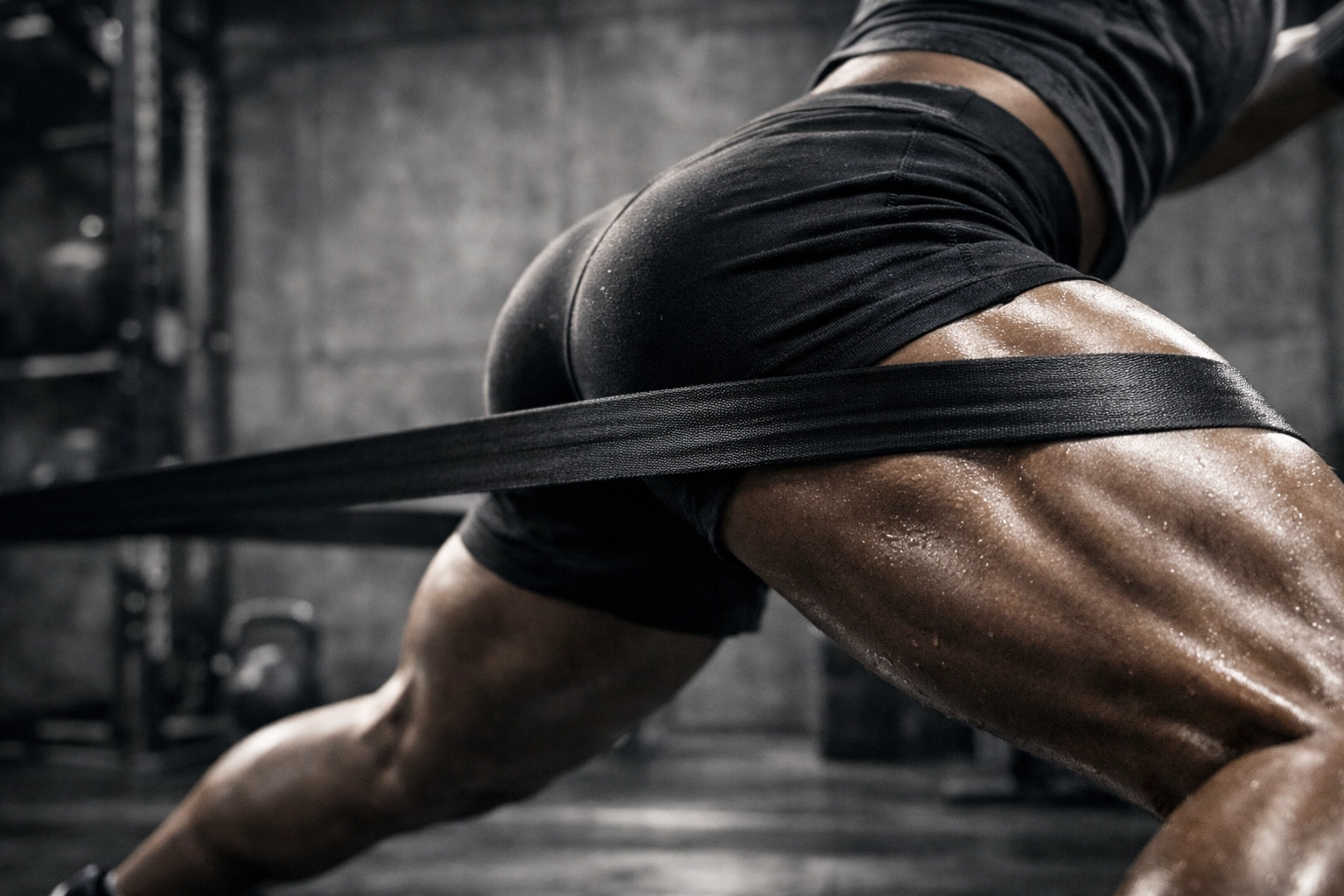
The Fix: Stop skipping the lateral work. Clamshells, lateral band walks, and single-leg stability exercises are non-negotiable. If you're looking for glute training near me, our coaches at the Glute Factory specialize in identifying these specific weaknesses to balance your physique and protect your floor.
5. You’re Training the Pelvic Floor in a Vacuum
Doing "kegels" while sitting in your car is fine, but it doesn't translate to a 200-pound hip thrust. The pelvic floor and glutes are meant to work together in a functional, dynamic environment.
A common mistake is treating pelvic floor health as something separate from "real" gym training. If you only train your pelvic floor while lying down, it won't know how to react when you’re sprinting, jumping, or lifting heavy.
The Fix: Integrate. Think of your pelvic floor as the "bottom" of your core canister. During movements like the Glute Gain Accelerator program, focus on a gentle "lift" of the pelvic floor as you initiate the concentric (upward) phase of your lifts. This trains the system to work as one cohesive unit.
6. Overactive Hip Flexors
In our modern world, we sit... a lot. This leads to chronically tight, overactive hip flexors. When your hip flexors are tight, they pull your pelvis into an "Anterior Pelvic Tilt" (your butt sticks out, and your lower back arches excessively).
This position puts the glutes in a disadvantaged state where they can't contract fully, and it stretches the pelvic floor into a position where it can’t function correctly. It’s like trying to jump while your knees are locked; the mechanics are just broken.
The Fix: Stretch the front, strengthen the back. Spend time opening your hips before your workout, but more importantly, focus on "tucking" your pelvis into a neutral position during your lifts. A neutral pelvis allows for the best communication between the pelvic floor and glutes.

7. Skipping Coordination Training
Strength is great, but coordination is queen. You can have the strongest glutes in the world, but if they don't fire at the right millisecond during a lung, you’re still at risk for injury and sub-optimal results.
Many people stick to machines because they are "easier," but machines take away the need for the pelvic floor and glute stabilizers to coordinate.
The Fix: Move in 3D. Your body doesn't just move up and down; it moves side to side and rotates. Incorporate movements like Curtsy Lunges or Step-ups with a knee drive. These require the glutes and pelvic floor to stabilize the pelvis in real-time. If you need a plan that covers all these bases, check out our Online Training options.
The Bottom Line
Building a world-class physique isn't just about how much weight is on the bar; it's about how well your body communicates with itself. The connection between the pelvic floor and glutes is fundamental to your health, your strength, and yes: your aesthetics.
When you stop making these seven mistakes, you’ll find that your lifts feel "snappier," your recovery is faster, and those glute gains start coming a whole lot easier.
Ready to take your training to the next level? Whether you're local and looking for the best glute training near me or you want to join our community from afar, the Glute Factory is here to help you build the strongest version of yourself.
Explore more at Swift Results Glute Factory:
Check out our Results
Grab an Ebook to start your journey at home
See our Plans & Pricing
Keywords: pelvic floor and glutes, glute training near me, Swift Results Glute Factory, glute strength, pelvic floor health, hip stability, glute medius, intra-abdominal pressure.
Comments